

Rukhsana Aslam Ayub Authors Article on Improving Health Literacy and Civic Responsibility through Service Learning
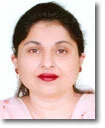
Rukhsana Aslam Ayub, M.B.B.S.
Deputy Director
Department of Medical Education
Fatima Memorial Hospital Medical and Dental College
Lahore, Pakistan
Congratulations to Rukhsana Aslam Ayub (PHIL 2009) on the publication of the following article:
Ayub RA, Jaffery T, Aziz F, Rahmat M. Improving health literacy of women about iron deficiency anemia and civic responsibility of students through service learning. Education for Health. 2015;28(2):130-137.
The article details an interventional exploratory study, begun during Dr. Ayub’s FAIMER Institute fellowship and designed to demonstrate the effectiveness of service learning in fostering civic responsibility and communication skills in college students and increasing health literacy among both students and community women. Thirteen first-year students from a women’s college in Pakistan participated in the project. The authors held small interactive group sessions to teach the students about iron-deficiency anemia (IDA) and communication skills. The students then developed and delivered a health education campaign for 65 community women and measured changes in the women’s health literacy about IDA. The implementation of service learning was shown to increase students’ knowledge about health topics and their sense of civic responsibility and improve their communication skills, and the community women showed substantial improvement in health literacy of IDA.
Since 2010, Dr. Ayub has implemented four service learning projects in four different communities, with more than 100 student participants from 15 institutions. The most innovative thing about these projects, she explains, is that students serve as public health workers with some structured and focused training and guidance, supplementing those involved in public health care. Dr. Ayub reports that projects like these are difficult to implement in developing countries due to limited resources. Her initial projects were largely supported by local NGOs and the institutions where the projects were implemented, but she is now being supported by Global Health Education Training & Service (GHETS), USA, and Flinders University and International Point of Care Testing (IPOCT), Australia. She received a mini-grant from the Women and Health Taskforce—one of the main working groups of GHETS—to implement a project and won another mini-grant in 2015 to continue her work.