

FAIMER Fellow Esther Ofoegbu Appointed First Female Head of Department of Medicine, University of Nigeria
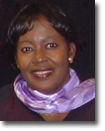
Esther Ofoegbu, M.B.Ch.B., M.Sc., F.W.A.C.P.
Head, Department of Medicine, College of Medicine
University of Nigeria, Enugu Campus
Enugu, Nigeria
Head, Department of Medicine
University of Nigeria Teaching Hospital
Enugu, Nigeria
On August 1, 2006, Esther Ofoegbu, M.B.Ch.B., M.Sc., F.W.A.C.P., became the first female Head, Department of Medicine, College of Medicine, University of Nigeria, Enugu Campus; and Head, Department of Medicine, University of Nigeria Teaching Hospital, Enugu.
Dr. Ofoegbu has worked for the College of Medicine, University of Nigeria since 1992. Over her 14-year tenure there, she has held a variety of positions, including having served as chairperson or faculty representative of a number of academic committees, coordinator of medical education, and head of the Department of Medicine’s "Think Tank" committee.
Dr. Ofoegbu is no stranger to FAIMER. In 2001, she was awarded a fellowship under the FAIMER International Fellowship in Medical Education (IFME) program when the program provided individual mentorship opportunities. She is currently a FAIMER Institute Fellow from the Class of 2005. Her fellowship project is "Information Technology Utilization in Medical Education."
When asked if her experiences as an IFME and Institute Fellow have had a role in helping her prepare for her new position, Dr. Ofoegbu shared the following reflections:
As an IFME fellow, I undertook a year-long program at the Office of Medical Education, University of Texas Medical Branch (UTMB), Galveston, Texas, from February 2001 to February 2002. This was my first exposure to skills acquisition training in teaching and assessment for problem based learning (PBL). My institution supported me in this program by granting me a sabbatical leave. It was at that period that my institution was giving serious attention to curriculum innovations.
With my return, I became the arrowhead in mobilizing my colleagues for professionalism in medical education and I gained the nickname, "Madame Medical Education."
The FAIMER Institute provided me with experiential learning in leadership and medical school governance, which I have found very useful in my work. The one year distance learning covering relevant medical education topics has equipped me with additional knowledge. My project has enabled me to pursue the task of establishing an office of medical education in my institution through a scientific process with excellent results.
There is no doubt that my IFME and Institute experiences have prepared me adequately for this new position. I now seem to be the resource person on curriculum matters in any meeting of heads of department.
During my IFME and Institute fellowships, I established an enviable network of friends, colleagues, and mentors in medical education. Top of the list are Dr. Gwendie Camp; Ann Frye, Ph.D., Director, Office of Educational Development, UTMB; Diane Heestand, Ed.D., Professor and Director, Office of Educational Development, University of Arkansas for Medical Sciences; Page Morahan, Ph.D., Co-Director of the FAIMER Institute; Bill Burdick, M.D., M.S.Ed., Director of Education and Co-Director of the FAIMER Institute; and FAIMER Fellows from the 2005 and 2004 classes. I am confident that these friends will assist me with advice, suggestions and resources in my new position, whenever I call on them.