

FAIMER Fellow Juanita Bezuidenhout Earns Ph.D. for Her Dissertation on Cytokines and Tuberculosis
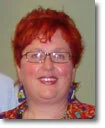
Juanita Bezuidenhout, M.B.Ch.B., M.Med. (Anatomical Pathology), Ph.D.
Principal Pathologist
Associate Professor, Department of Pathology
Stellenbosch University
Stellenbosch, South Africa
In December 2005, Juanita Bezuidenhout, M.B.Ch.B., M.Med. (Anatomical Pathology), received her Ph.D. from Stellenbosch University in Stellenbosch, South Africa. A FAIMER Institute Fellow from the Class of 2005, Juanita is currently a principal pathologist and associate professor in the Department of Pathology, Division of Anatomical Pathology at Stellenbosch University and the National Health Laboratory Services. Her Ph.D. dissertation was entitled, "Cytokines and Tuberculosis: An Investigation of Tuberculous Lung Tissue and a Comparison with Sarcoidosis."
Juanita shared the following reflections on the significance of her dissertation and the relation it has to her overall career:
Tuberculosis is one of the most common diseases in the developing world, with serious morbidity, mortality, and socio-economic implications. To understand the pathogenesis of this disease and its interaction with HIV lies at the heart of solving the problem. I investigated a small, specific area in the pathogenesis of granuloma development in tuberculosis in HIV-negative and positive patients and patients with sarcoidosis to determine whether the relationship between the four fundamental cytokines in granuloma formation changes in situ in these different scenarios. My conclusion was that the effect of a cytokine depends at least partially on the stage of disease and that the balance between the various cytokines and the levels of these cytokines contribute to their role in resolution or disease progression. Therapeutic modulation of these cytokines may contribute to treatment and reduce the destructive effects of tuberculosis.
My interest in tuberculosis and granulomatous disease was triggered by my exposure to pulmonary pathology as part of my responsibilities in our department and it was a logical step to develop a responsibility into a Ph.D. It also slots in with the faculty research focus on HIV and tuberculosis and forms part of the Desmond Tutu TB Centre's research activities. In addition, to be considered for the position of associate professor, a Ph.D. is required. Additional Ph.D. theses have developed from my original thesis, thereby sustaining my contributions to research in this field, resulting in the development of my career in terms of congress presentations, publications, etc. I am currently co-authoring two chapters in an inter-nation tuberculosis textbook. Most importantly, I have developed research skills and learnt invaluable lessons regarding the research process, and also about human relations and communication.
Asked how her dissertation has impacted her role as a medical educator, and how it will impact her career focus over the next few years, Juanita reflected:
Once you have been through the process of producing a thesis, you have an understanding that comes with experience. This is of immense value as a medical educator, especially since I am mainly involved in postgraduate education. The insight into the research process, but also the human interactions, is invaluable in working with postgraduate students. Although the topic could not be further removed from medical education, the essence of the skills are the same.
As most other medical academics in South Africa, I have to focus on service, research, and education, as these are requirements of my appointment. Although my participation in tuberculosis research will continue, I now also have responsibility for the gastrointestinal (GIT) pathology in our department, and that has opened several new research doors. Of course, since 2002, when I first received the award for the best scientific exhibition in the faculty, for an exhibition about the clinical rotation in pathology, and later received the Rector's Award for Teaching Excellence, my main focus has been medical education. Apart from continuing with my FAIMER project on establishing a national framework for postgraduate pathology training, I intend to be active in the newly established Centre for Health Sciences Education as well as the Southern Africa Regional FAIMER Institute. I am chairperson of the newly established education committee of the Pathology Department (including all six pathology divisions) and I want to focus on developing this into an active research and development group on both under- and postgraduate levels.
As an Institute Fellow, Juanita developed an education innovation project entitled, "A National Framework for Specialist Training – Start with Pathology?" She shared the following reflections about her FAIMER experience:
I learnt many things through the course of FAIMER and my project. Research skill, project management skills, communication skills, etc, but the best take home lessons were the less tangible ones: To trust my instinct. Keep close and continuous contact with my found pilots. We all need each other. Do not try to do everything on my own. There is always support and help available. I sometimes just need to look harder for it. Always pre-empt as much as possible (in cricket terms – cover all your wickets) and address before it becomes a problem. Have alternative solutions ready on the back burner. Be careful about what you say in public, but also be prepared to take that calculated risk. Know how to apologise. Because things are done electronically, doesn't necessarily mean the information is easy to access.
I sometimes look back at where I am now and think: "for somebody who gave up medicine in my third year, only to return two years later, I have come much further than I anticipated then." But then, there is so much more to do!! I want to do everything. The main challenge in education in our institution is probably human resources. We are constantly required to provide service, do research, and be educators. At least research and education can now be combined. I believe that a greater awareness of the "research side-effect" of education may entice more people into education. This of course immediately elicits a philosophical debate, which I am sure David [Cameron, also an Institute Fellow from the Class of 2005] will love, but I believe that it is one of the ways to entice people into education.
Medical education and innovation is crucial in meeting the health needs of our communities. The shift in focus from knowledge-based tertiary environment learning to outcome-community-based learning would not have happened if not driven by medical educationalists. The awareness and the insight that goes with, for instance, portfolios, add a dimension to learning that was previously completely neglected. If I had to highlight one way in which FAIMER has changed me, it is to consciously reflect. By nature I have always been reflective (INFP), but to reflect with true purpose AND to constructively act on that, I became skilled at through FAIMER.
I believe that the FAIMER community adds value to medical health and education in so many ways, most of which are often hidden at the time of the experience. To be part of this community is an honour and a privilege.